
Here's the full text of address to the nation by President Droupadi Murmu on the eve of the Republic Day 2023.

Sales of total electric vehicles in India are expected to be around 10 lakh units this year, equal to what was sold collectively in the last 15 years, mainly riding on the good traction witnessed by electric two-wheelers, Society of Manufacturers of Electric Vehicles (SMEV) said on Thursday. In 2021, the sales of electric two-wheelers (E2Ws) in the country jumped over two-fold at 233,971 units driven by a good traction of high-speed scooters as compared to 100,736 units in 2020, SMEV said in a statement. "We haven't seen better days than the last few months in the entire EV journey.

'The decision to supply free food grains is not an economically sound decision because the government will find it very difficult in future to charge anything for food grains.'

RBI in its policy review last month kept interest rates unchanged and said it sees an upside risk to inflation.
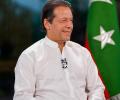
In an interview with the Financial Times following an assassination attempt this month, Khan said he no longer 'blamed' the US and wants a 'dignified' relationship if re-elected.

Monthly and seasonal suburban railway tickets purchased through digital mode will get 0.5 per cent discount from January 1
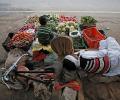
India's inflation trajectory in the coming months will be influenced more by the geo-political situation due to the war in Europe and its impact on supply chains and commodity prices. However, the country is better placed than most to "weather the storm" and achieve growth of close to 8 per cent in the current fiscal year, the finance ministry said in its latest monthly economic report on Thursday. "Through the channel of imports, elevated global crude and edible oil prices now have a significant impact on India's inflation outlook. "Government measures to keep the prices of these commodities in check, along with the recent hike in policy rates by the RBI, are expected to temper inflationary pressures in the economy," the monthly economic report for April, drafted by the finance ministry's economic division, said.
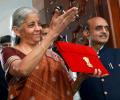
The real requirement for the finance minister's explanatory speech is to explain the measures taken in the Budget to influence inflation and growth not just through the announcement of a deficit goal, but more broadly through the impact on money supply, consumer demand, foreign trade and investment, explains Nitin Desai.
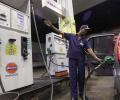
With the government reducing the net worth for new entities in fuel-marketing space to Rs 250 crore, the market is open for new players like Total, Adani, and Saudi Aramco -- and even supermarkets - to open fuel outlets.
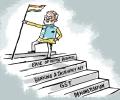
India's GDP expanded 13.5 per cent in the April-June quarter, the quickest pace in a year, to retain the world's fastest growing economy tag but rising interest costs and the looming threat of a recession in major world economies could slow the momentum in the coming quarters.
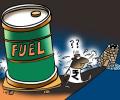
Inflation in food articles, fuel and power contracted in July.

The people will view it from their viewpoint, their immediate interest, historical experiences, their insecurities, he said.

India's services sector activity continued to expand in September, supported by favourable underlying demand amid the easing of COVID-19 restrictions, but lost some momentum from August's 18-month high level, a monthly survey said on Tuesday. The seasonally adjusted India Services Business Activity Index fell from 56.7 in August to 55.2 in September, but remained well above its long-run average. "Despite easing from August, the rate of expansion was marked and the second-fastest since February 2020," the survey said.

The sweeping economic sanctions on Russia - the second largest producer of crude oil - following its invasion of Ukraine late last month can cull global and domestic growth along with the added pains of higher inflation and currency depreciation, RBI Deputy Governor Michael Patra has said. And if the war lingers on, it can even lead to deglobalisation and even a recession, he added. The ongoing war has only added a whole new dimension to the outlook, and in fact, a weighty downside, Patra said in a lecture at the industry lobby IMC on Friday evening.

This is the highest level of wholesale price index-based (WPI) inflation since February, when it was 2.26 per cent.

Analysts at Bank of America Merill Lynch said that fears of inflation getting "generalised" are overdone, as only two sub-categories of fuel and light and housing (accounting for 22 per cent of the basket) have seen a price-rise above the headline 5.2 per cent.

India's dependence on imported crude oil to meet domestic demand has been a matter of concern for years. Delivering the inaugural address at the global energy summit - Urja Sangam - in 2015, Prime Minister Narendra Modi had called for enhancing domestic oil and gas production to cut the import burden. He aimed at lowering it by at least 10 per cent by 2022 - to coincide with the platinum jubilee of India's independence. But this target is far from being achieved and the country's import reliance has only risen.
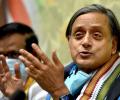
The former Union minister said the population debate is 'utterly misplaced' and half a century out-of-date as a large majority of Indian states have achieved replacement levels of fertility.
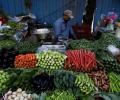
Retail inflation fell to a five-month low of 4.35 per cent in September from 7.27 per cent in the year-ago period as prices of vegetables and other items declined, according to government data released on Tuesday. The moderation in Consumer Price Index-based inflation is in line with the assessment of Reserve Bank Governor Shaktikanta Das who recently projected substantial softening of retail inflation. The CPI inflation was at 5.3 per cent in August and at 7.27 per cent in September 2020.
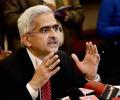
The uncertainty created by the jump in COVID-19 infections and localised lockdowns prompted RBI Governor Shaktikanta Das and other members of the rating setting panel MPC to unanimously vote for status quo in interest rates and an accommodative policy stance to support growth, as per minutes of the meeting released on Thursday. "The need of the hour is to effectively secure the economic recovery underway so that it becomes broad-based and durable," the Governor said during the three-day meeting of the Monetary Policy Committee (MPC) which ended on April 7. The renewed jump in COVID-19 infections in several parts of the country and the associated localised and regional lockdowns add uncertainty to the growth outlook, he observed, as per the minutes of the meeting released by the central bank.

Sonia hit out at the BJP, saying the ruling party's "divisive agenda" has become a regular feature of political discourse in all states and that history is being "mischievously distorted" to add fuel to its agenda.
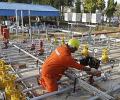
India's top oil and gas producer ONGC wants the government to scrap windfall profit tax levied on domestically produced crude oil and instead use the dividend route to tap into bumper earnings resulting from surge in global energy prices. The firm also favours a floor price for natural gas at $10 per million British thermal unit -- the current government-dictated rate -- to help bring deposits in challenging areas to production, two sources aware of the matter said. State-owned Oil and Natural Gas Corporation (ONGC) management during discussions with government officials stated that levying windfall profit tax on domestic oil producers, while at the same time reaping rich savings from buying discounted oil from Russia was unfair.

Pragmatism and flexibility is a virtue. An untethered and short-term approach to policymaking is a flaw, argues Mihir S Sharma.

Trinamool Congress chief and West Bengal Mamata Banerjee on Tuesday announced her decision to withdraw from the Congress-led ruling United Progressive Alliance.

If imputed inflation for April and May is used, then you have inflation of over 6 per cent for two consecutive quarters, which is a worrying signal for the RBI.

Gandhi is out to "connect" Bharat but he needs to study Indian history first, Shah said.

India's industrial production contracted by 3.6 per cent in February, official data showed on Monday. According to the Index of Industrial Production (IIP) data released by the National Statistical Office (NSO), manufacturing sector output declined by 3.7 per cent in February 2021. Retail inflation rose to 5.52 per cent in March, mainly on account of higher food prices, government data showed on Monday. The consumer price index (CPI) based retail inflation stood at 5.03 per cent in February.
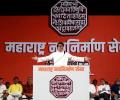
Maharashtra NCP's chief spokesperson Mahesh Tapase also accused the Bharatiya Janata Party of following the use-and-throw policy and added that Raj Thackeray "will have to pay for his own karma".

Services sector activities improved further and touched a five-month high in April driven by a surge in incoming new work orders that boosted business activity and supported a renewed increase in employment, according to a survey. The seasonally adjusted S&P Global India Services PMI Business Activity Index jumped to 57.9 in April, from 53.6 in March, highlighting a sharp rate of expansion that was the fastest since last November amid mounting price pressures. For the ninth straight month, the services sector witnessed an expansion in output.

Given India's reliance on coal, electric vehicles could at best be 10% more efficient than petrol in terms of CO2 savings.
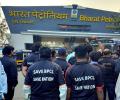
In December 2019, the India arm of Deloitte Touche Tohmatsu surprised many with its ultra-competitive bid to become the transaction advisor for the country's largest strategic divestment in Bharat Petroleum Corporation (BPCL). The multinational major quoted just Rs 1; the second-highest bidder, SBI Caps, reportedly quoted Rs 15-17 crore. For Deloitte, the motivation was to bag a prestigious deal adding a national energy company to its portfolio. No doubt, it expected BPCL to go to a marquee buyer in quick time.

'I think public awareness should be created and laws should not be made only for the sake of politics'

The economics behind the surprising popularity of Donald Trump and Bernie Sanders.

India's negotiating posture at the multilateral negotiations should be aligned with a significantly transformed development strategy domestically.' 'The positions the country takes at the negotiations will then carry credibility, says Shyam Saran, former foreign secretary and India's chief negotiator on Climate Change 2007-2010.
Experts say local demand, government policies in retail and refining sector are attracting foreign players.
The government on Tuesday ruled out any rollback of last month's increase in prices of petrol, diesel and LPG, and said a policy for pricing of major petroleum products was under review.

Five cities -- Delhi, Bengaluru, Kolkata, Hyderabad and Surat -- ceded their power of procurement and agreed to a different procurement model to operate state-run buses.

In Kerala, the use of black ranges from such convenience to strictures by community and religion to fashion and personal choice. One would have to be really insecure or too fond of the well settled life to see black solely as a badge of protest, points out Shyam G Menon.

The economy is gaining traction with gradual pick up in manufacturing activity and moderation in contraction of services, spurred by comfortable liquidity conditions, an RBI article on Tuesday said. Observing that the retreat of the second wave of coronavirus pandemic has been slow, the RBI in an article on the 'State of Economy' said, the aggregate demand conditions are buoyed by the release of pent-up demand post unlock, while the supply situation is improving with the monsoon catching up to its normal levels and sowing activity gaining pace. "Reaffirming the traction that the economy is gaining, the manufacturing activity is gradually turning around, while contraction in services has moderated.
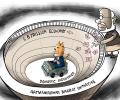
The Indian economy is on the path of a durable recovery on the back of conducive monetary and credit conditions, the global headwinds notwithstanding, said a Reserve Bank of India (RBI) article on the state of the economy. Domestically, there have been several positives on the COVID-19 front, in terms of reduced infections and faster vaccinations, the article published in the RBI Bulletin November 2021 added. The Indian economy, the article said, is clearly differentiating itself from the global situation, which is marred by supply disruptions, stubborn inflation and surges of infections in various parts of the world.
